
English| EUR
Suggested for you
More currencies
Choose a language
Mount Liamuiga's summit stands at 3,792 feet, making it the highest peak in St Kitts and Nevis. The trail to the crater rim demands moderate-to-high fitness, with steep rainforest sections and rope-assisted scrambles through dense cloud forest. This guide explains the physical demands, technical challenges, and what makes the six-mile round trip one of the Caribbean's most rewarding volcano hikes.
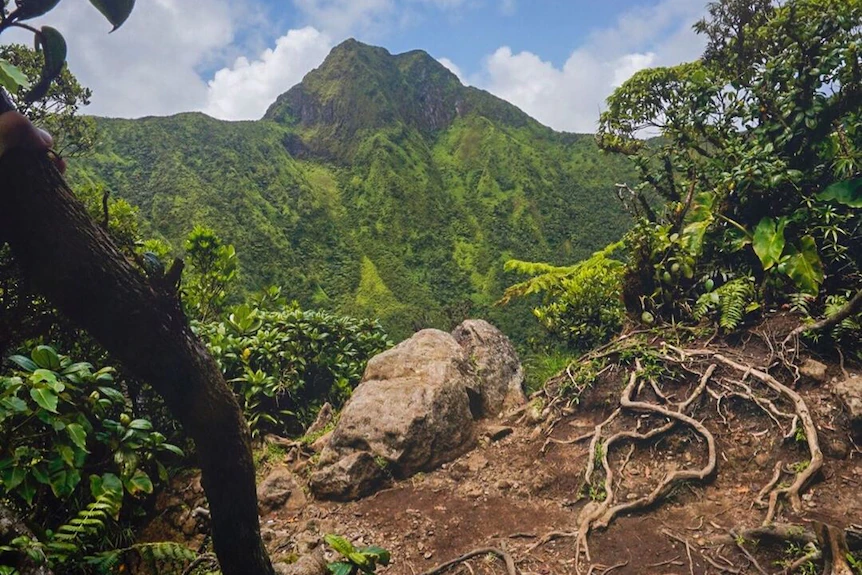
Quick answer
The st kitts volcano hike difficulty rates as moderate to challenging, requiring solid cardiovascular fitness and sure footing. The six-mile round trip gains approximately 2,900 feet of elevation over three miles, with the final third involving rope-assisted climbs through mud, exposed roots, and near-vertical sections. Most hikers complete the ascent in 2.5 to 4 hours depending on fitness level, with an additional 1.5 to 2.5 hours for descent.
Mount Liamuiga's crater measures a mile across and drops 800 feet to a freshwater lake below, but reaching that rim requires navigating one of the Eastern Caribbean's steepest accessible trails. The path begins in cultivated farmland at roughly 900 feet elevation, transitions into dense rainforest within the first mile, and eventually enters cloud forest where visibility drops and moisture saturates every surface. The st kitts volcano hike difficulty escalates in distinct phases. The lower third follows a well-defined but consistently upward path through mahogany and giant ferns, where the gradient averages 15 to 20 percent. The middle section steepens considerably as the trail enters primary rainforest—roots form natural staircases, and hikers grab branches for balance on slopes that approach 30 degrees. The final third, beginning around 3,000 feet, introduces the rope-assisted sections that define the Liamuiga ascent. Fixed ropes anchor to trees every 50 to 100 feet, providing handholds on near-vertical pitches where mud and decomposing leaves eliminate secure footing. Physical demands center on sustained cardiovascular output and leg strength rather than technical climbing skill. The trail never requires scrambling with both hands and feet simultaneously, but thigh muscles work continuously against gravity for two to three hours without flat relief. Humid air and equatorial sun in the exposed lower sections drain energy faster than elevation alone would suggest. Cloud cover at higher altitude brings cooler temperatures but increases slipperiness underfoot. Local guides frequently recommend the hike for regular exercisers who can sustain moderate exertion for three hours, while cautioning against it for those whose primary cardio comes from short gym sessions. The descent presents its own challenge—knees absorb impact for nearly two hours, and the same muddy sections that required rope assistance on the way up now demand controlled sliding and braking. Most hikers rate the overall challenge as comparable to summiting a 4,000-foot peak in temperate regions, with tropical heat and humidity adding the equivalent of 500 to 800 feet to the perceived difficulty.
“The trail never requires technical climbing, but thigh muscles work continuously against gravity for two to three hours without flat relief.”
The Mount Liamuiga hike covers approximately 5 miles round-trip and takes 4 to 5 hours to complete, depending on fitness level and trail conditions. The route demands moderate to strenuous effort as you navigate dense rainforest, exposed volcanic rock, and a steep crater rim descent.
The trail climbs roughly 2,600 feet from trailhead to summit, with the steepest sections occurring in the upper third. Many hikers underestimate the sustained incline through humid rainforest, where footing on wet roots and rocks requires constant attention.
The first mile follows a well-marked but muddy path through dense vegetation, crossing small streams and exposed tree roots. This segment feels manageable but becomes slippery after rain, and hikers often lose traction by rushing instead of planting each step deliberately.
Beyond the forest canopy, the trail narrows and steepens significantly, with loose volcanic soil and larger boulders requiring hands-on scrambling in places. Pace yourself here—most fatigue-related turnarounds happen in this zone when hikers fail to take short breaks every 10 to 15 minutes.
The final approach involves a near-vertical descent into the crater using a rope anchored to trees, with limited footholds on wet rock. Grip strength and controlled movement matter more than speed; hikers who lean back and walk down in small steps manage this section more safely than those who try to climb quickly.
The best arrival window for the Mount Liamuiga hike is 07:00–10:00. Starting during these hours is critical to manage physical exertion by avoiding peak afternoon heat, humidity, and the cloud cover that frequently obscures the summit.
Drier conditions, 24°C–29°C
Lower humidity levels make exertion more manageable during these months.
Higher humidity, 26°C–31°C
Increased moisture levels can make the steep terrain feel more demanding.
—
Fewer hikers on the trail allow for a steadier pace without congestion.
Verdict: The optimal time to hike is between 07:00–10:00 during the drier months of December through April to minimize heat stress and maximize summit visibility.
Proper gear and preparation directly impact your safety and comfort on this challenging 5-6 hour rainforest ascent.
The Mount Liamuiga trail is a public resource accessible without an entrance fee. While trail access is free, most visitors choose to hire professional guides to navigate the terrain.
Verdict: Hikers pay 0 USD for trail access, though costs vary significantly depending on the tour company selected for guided excursions.
The Mount Liamuiga trailhead is accessible daily, providing 24-hour access to the public trail. While the path remains open around the clock, hikers should plan their excursion to ensure they complete the climb during daylight hours for safety.
The Mount Liamuiga Trailhead is located in the northern region of St. Kitts near the village of St. Pauls. Access is best achieved by vehicle, as there is no direct public transit to the start of the trail.
Follow the Main Road to St. Pauls, then follow signs toward the mountain trailhead
Arrange a private transfer to the Mount Liamuiga Trailhead in St. Pauls
For the best experience, plan your arrival between 07:00 and 10:00 to avoid afternoon heat, humidity, and cloud cover at the summit.
Everything you need to know about st kitts volcano hike difficulty
The st kitts volcano hike difficulty is considered strenuous due to steep, sustained inclines and tropical humidity. Hikers must be prepared for a physically demanding ascent through dense rainforest to reach the summit.
This trail is generally not recommended for young children or those without significant hiking experience. The steep mud sections and rock scrambling increase the st kitts volcano hike difficulty significantly for inexperienced hikers.
The terrain consists of natural dirt paths, exposed tree roots, and large boulders that become slippery in wet conditions. You will navigate through tropical rainforest canopy and reach high-altitude cloud forest environments before the rim.
The entrance fee is 0 USD as the trail is public and free to access. While it costs nothing to enter, many visitors choose to book guided tours for navigation and local knowledge.
Many travelers find the st kitts volcano hike difficulty to be higher than typical coastal walks due to the rapid elevation gain over a relatively short distance. Proper physical conditioning and footwear are essential for managing the climb.
The most common mistake is failing to start early, which leads to hikers encountering afternoon heat and reduced visibility. Arriving between 07:00 and 10:00 ensures you avoid the heavy cloud cover that often shrouds the peak.
While a guide is not legally required for the public trail, many hikers opt for one to navigate the path safely. Guided tours are frequently booked to assist with the complexities of the ascent.